Home » Automation
Production automation for repeatable high-tech production
Our approach
From design to automated process
Production automation is an integral part of the factory at Doeko. Instead of using separate automation solutions, we develop our systems ourselves so they fit our machines, material flows and production routes. This creates a controlled production flow in which components and modules can be processed efficiently across multiple process steps.
By connecting ERP and MES systems, central storage, AGV transport and robot-controlled machining cells, parts can be moved automatically between different machines. This makes it possible to produce complex high-tech components, modules and systems repeatably within continuous production routes.
Our automation consists of:
- Central storage
- AGV transport
- Robot cells
- Product handling
- Automated quality control
Central storage
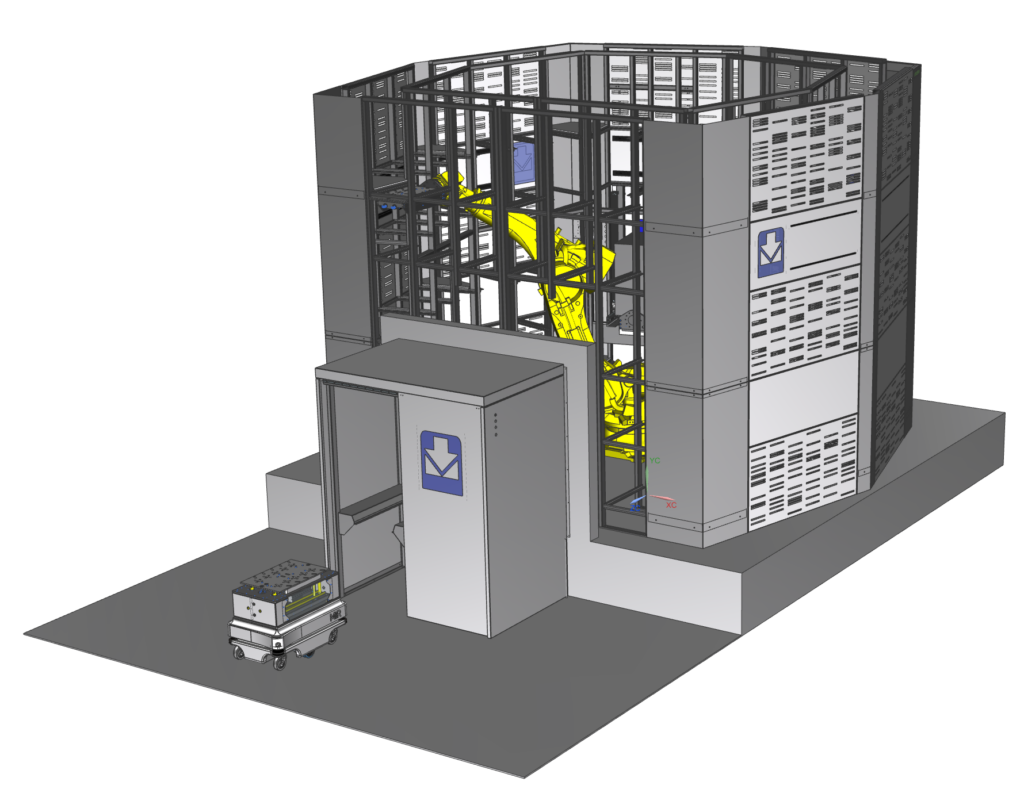
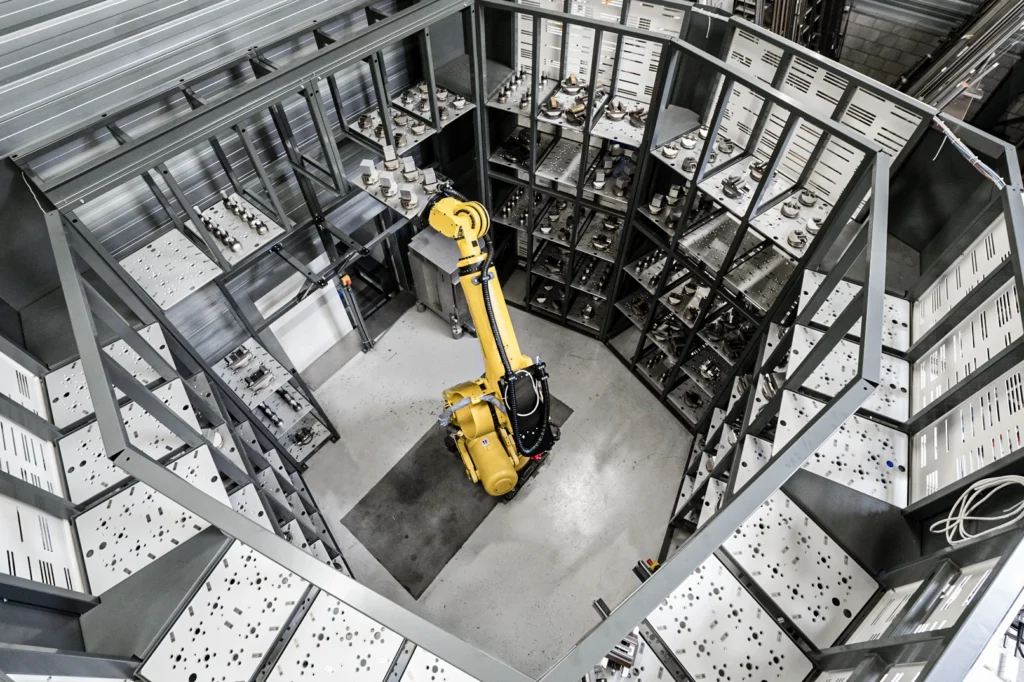
Central storage forms the logistical heart of our automated production environment. In this storage system, machining pallets are managed centrally and kept available for different machines within the factory. This allows workpieces to be scheduled automatically and move on to the next process step without manual transfer.
The storage system offers space for up to 1020 machining pallets, allowing multiple product flows to be processed in parallel within one production environment. An integrated washing installation is also included in the central storage, so parts can be cleaned directly after machining before moving on to the next process step.
This combination of storage and cleaning contributes to a stable material flow and a controlled transition between successive operations.
AGV transport
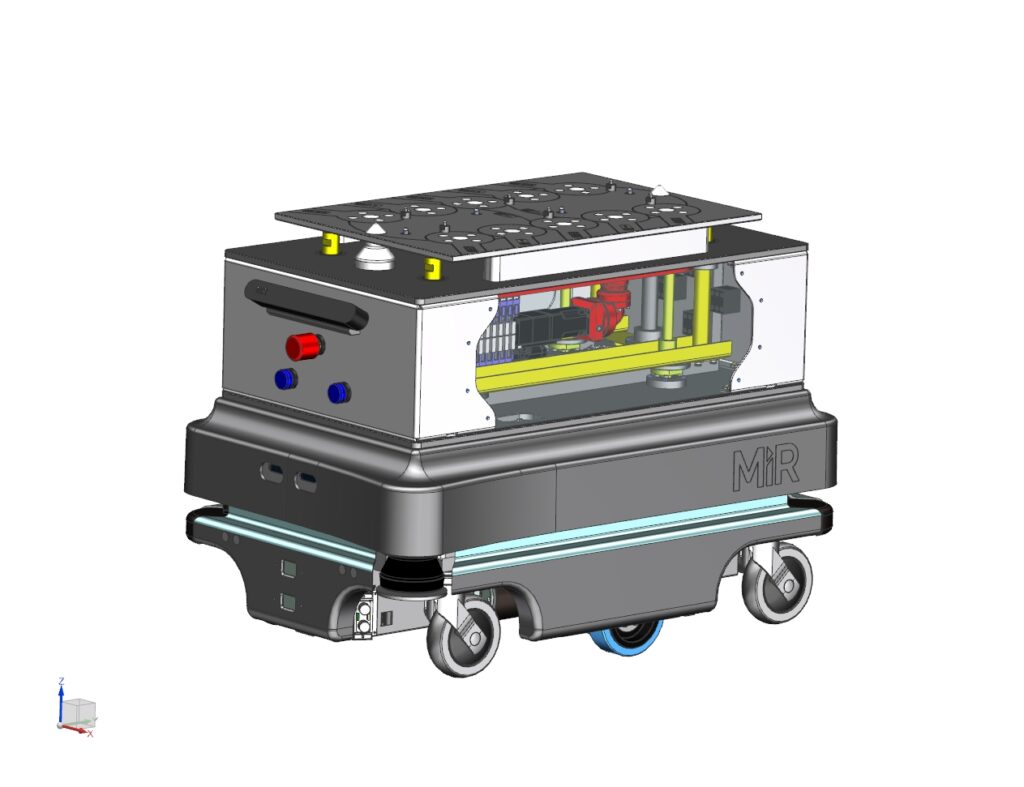
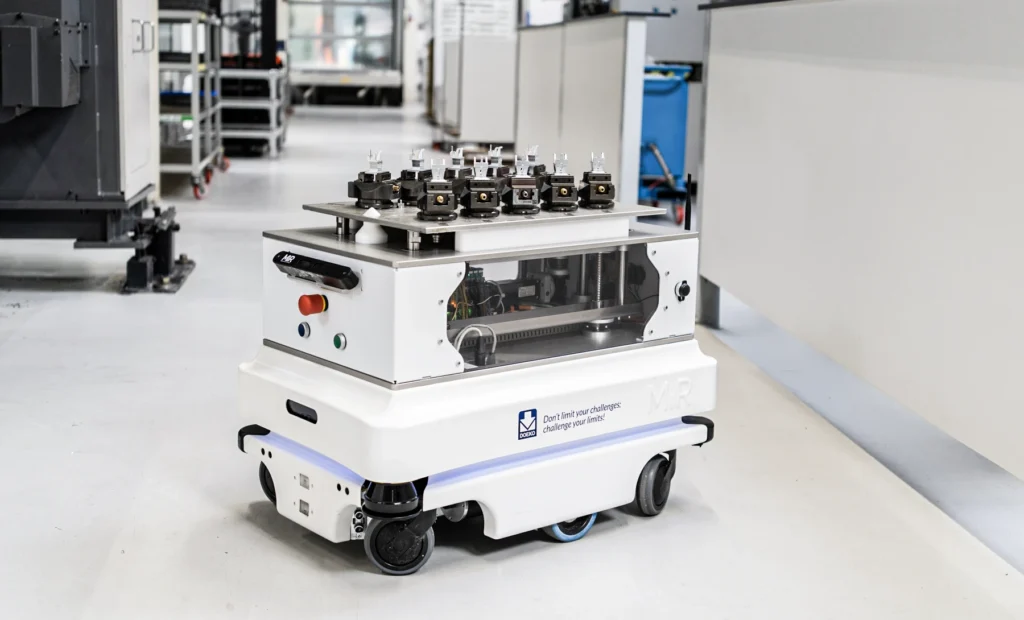
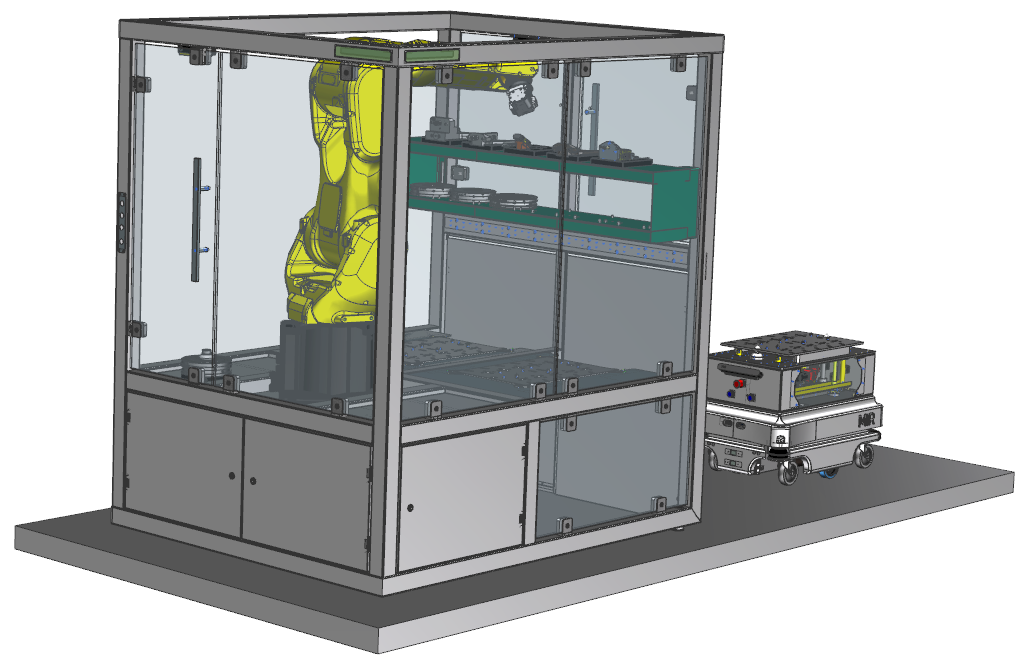
The connection between machines and central storage is handled by an AGV system that automatically moves trays with pallets between workstations. This keeps parts within a continuous production route without manual logistics steps.
With a load capacity of up to 200 kg, the AGV can efficiently transport both one-offs and series work between different production phases. This makes it possible to carry out multiple operations in sequence on different machines within one integrated route.
Standardised robot cells
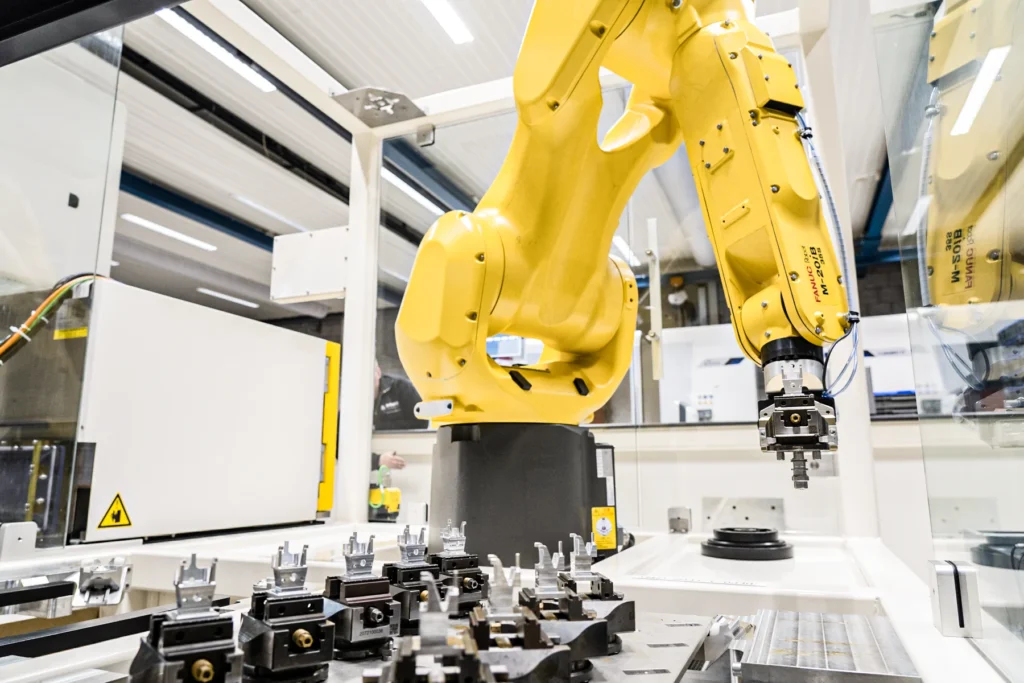
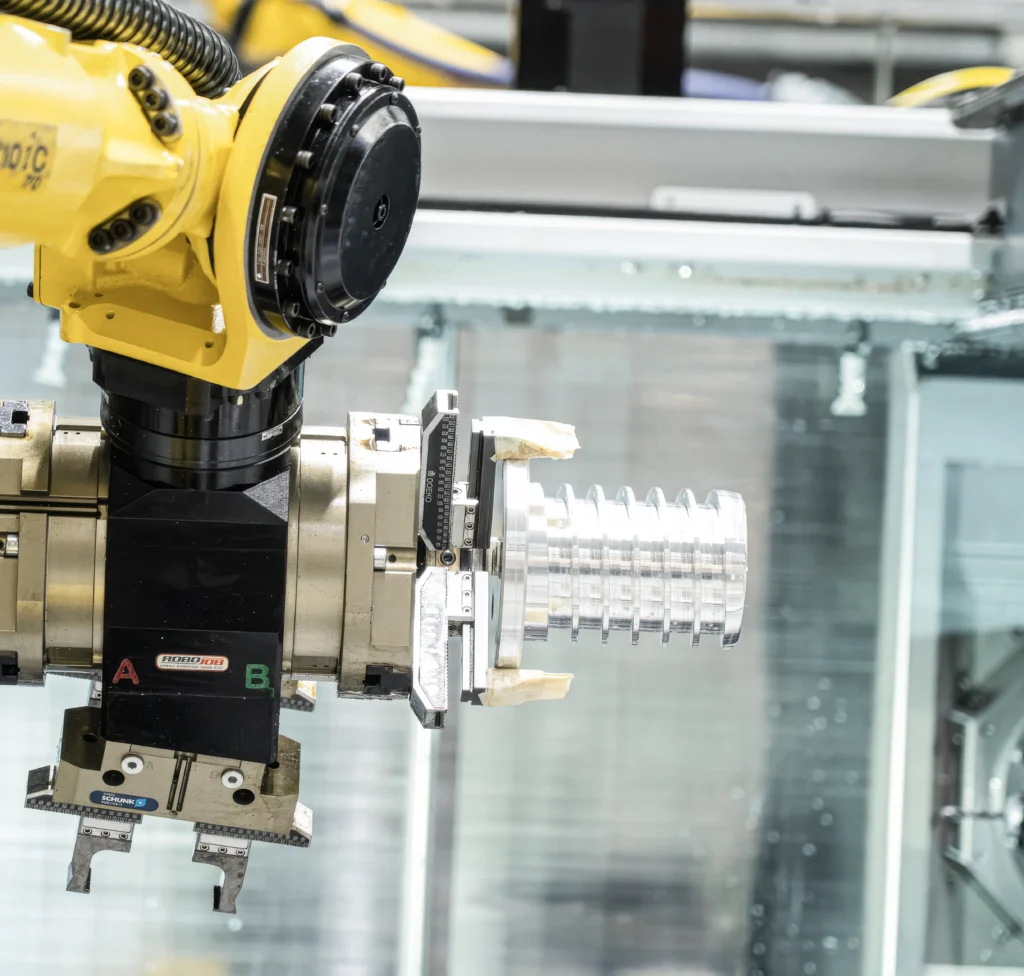
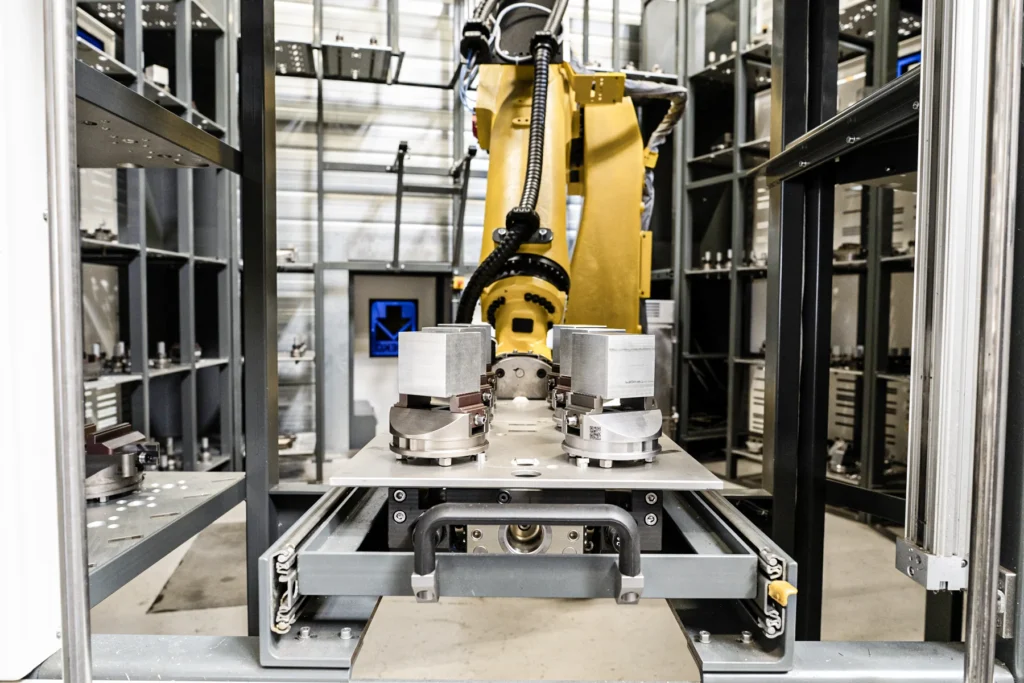
Within the factory, different machines are supported by standardised robot cells that can be used flexibly for pallet handling. By using interchangeable grippers, different clamps can be positioned and processed automatically within different machining centres.
The standardisation of these cells makes it possible to apply automation to multiple machines without having to develop a completely new solution for every application. This keeps automation scalable and suitable for a wide range of product types.
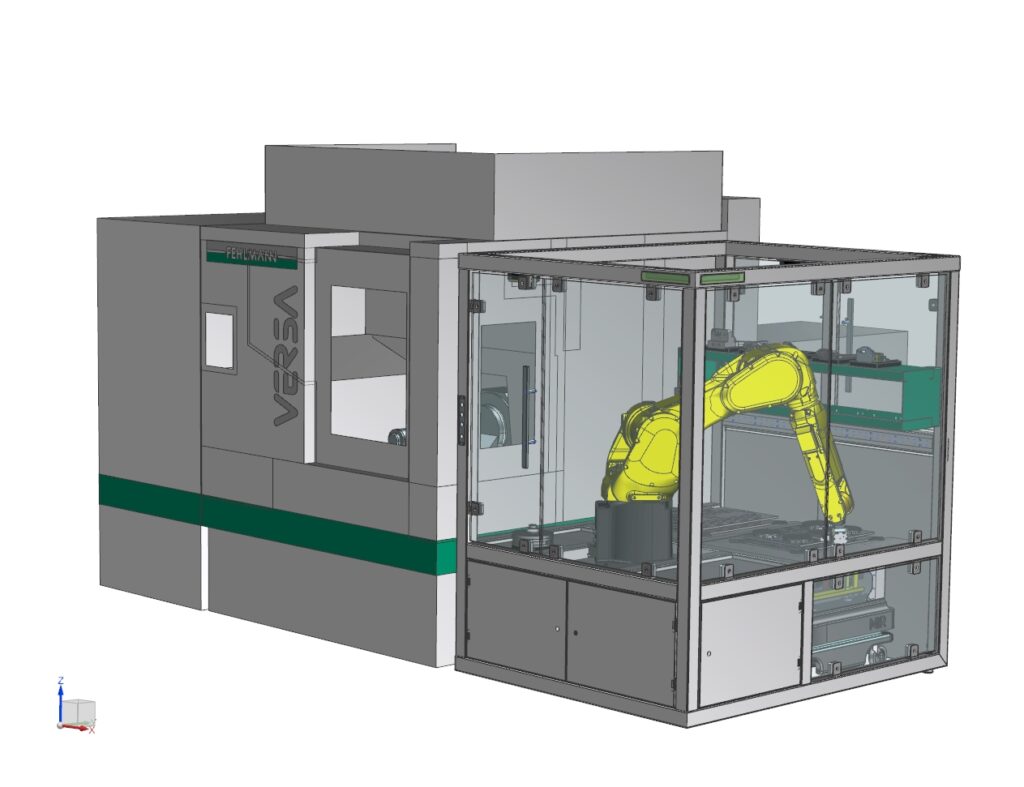
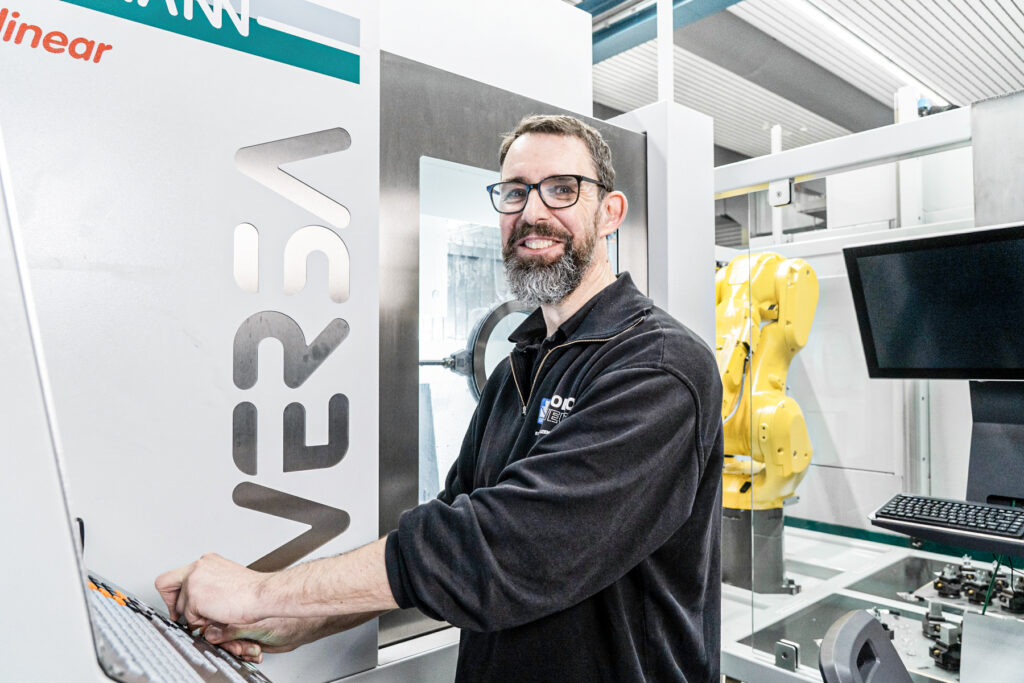
Robot cell with two Fehlmann Versa 645 milling machines
Two 5-axis Fehlmann Versa 645 milling machines are connected to one robot cell for automated loading and unloading of machining pallets. The cell is supplied from central storage and receives the correct pallets for the planned operations via the AGV.
Within this setup, the robot can automatically present products to both milling machines. This makes the cell efficient for accurate 5-axis machining and longer unmanned production runs. The combination is suitable for complex components where stable workholding, repeatability and machining accuracy are critical.
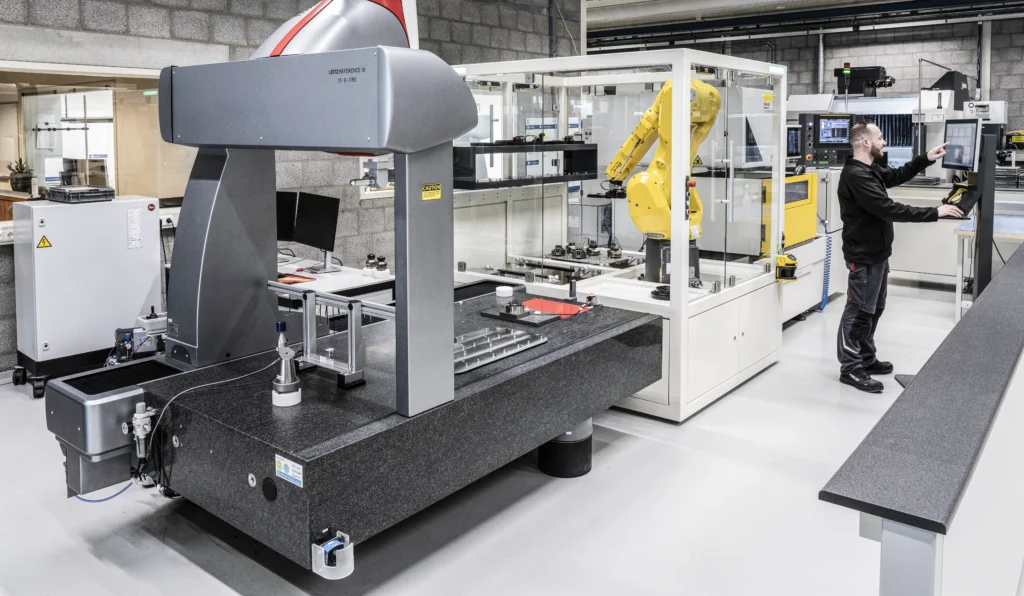
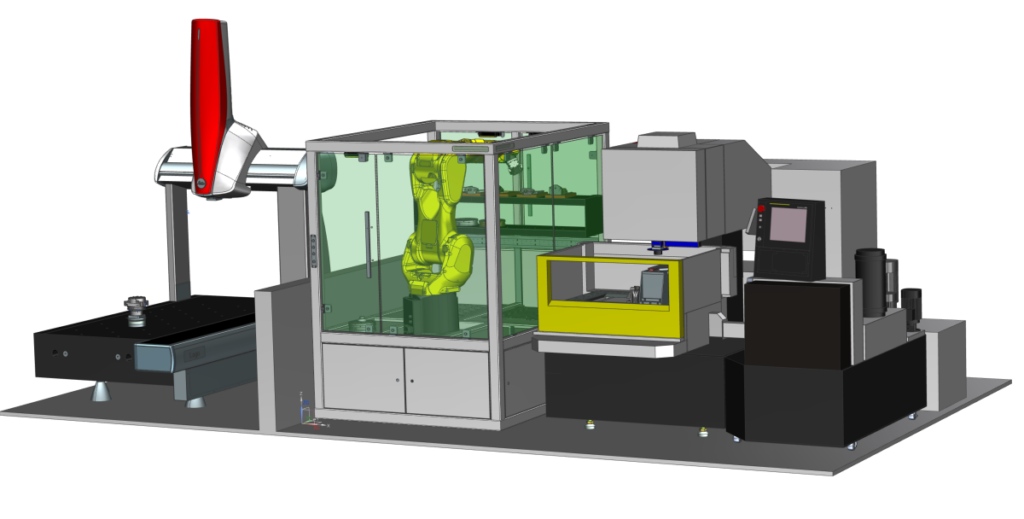
Robot cell with Fanuc C600 and Leitz Reference Xi CMM
Within this cell, the robot can load and unload both the Fanuc C600 wire EDM machine and the Leitz Reference Xi CMM. The robot cell is connected to central storage and is supplied with products via the AGV.
This means wire EDM and automated quality control are included in the same automation environment as the two 5-axis milling machines. This setup makes it possible to schedule precise EDM operations and inspection measurements in a customer-specific way within automated production routes.
When a quality measurement detects a deviation, production is automatically interrupted so that deviations do not continue to repeat within a series.
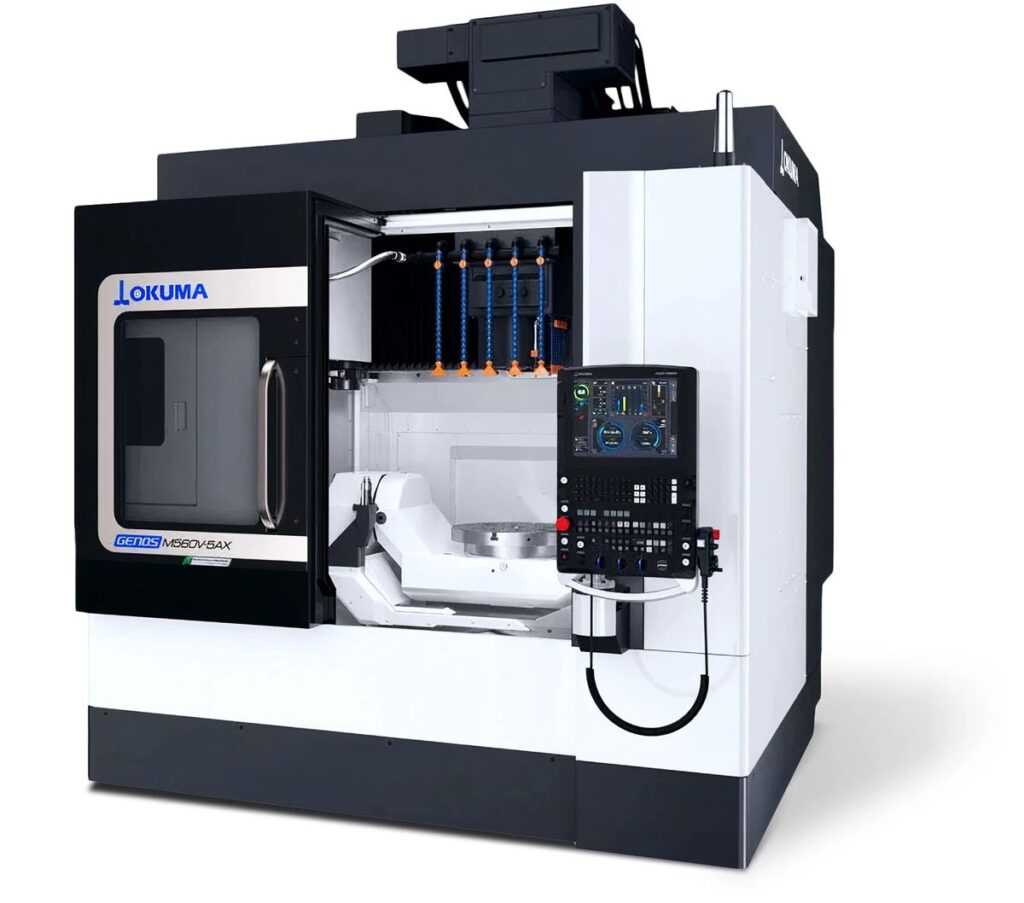
Automation on the Okuma Genos M560V-5AX
The Okuma Genos M560V-5AX has its own robot automation in which workpieces are automatically handled and clamped in the machine. In this setup, products are not pre-clamped, but positioned and clamped directly in the machine by the robot.
This form of product handling makes the machine suitable for both smaller series and larger production runs. Because manual clamping is not required, setup time is reduced. This makes the automation valuable for products that do not require multiple operations.


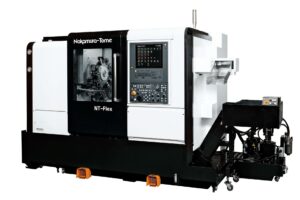
Automation on the NTX1000 and NTX2000 multi-task machines
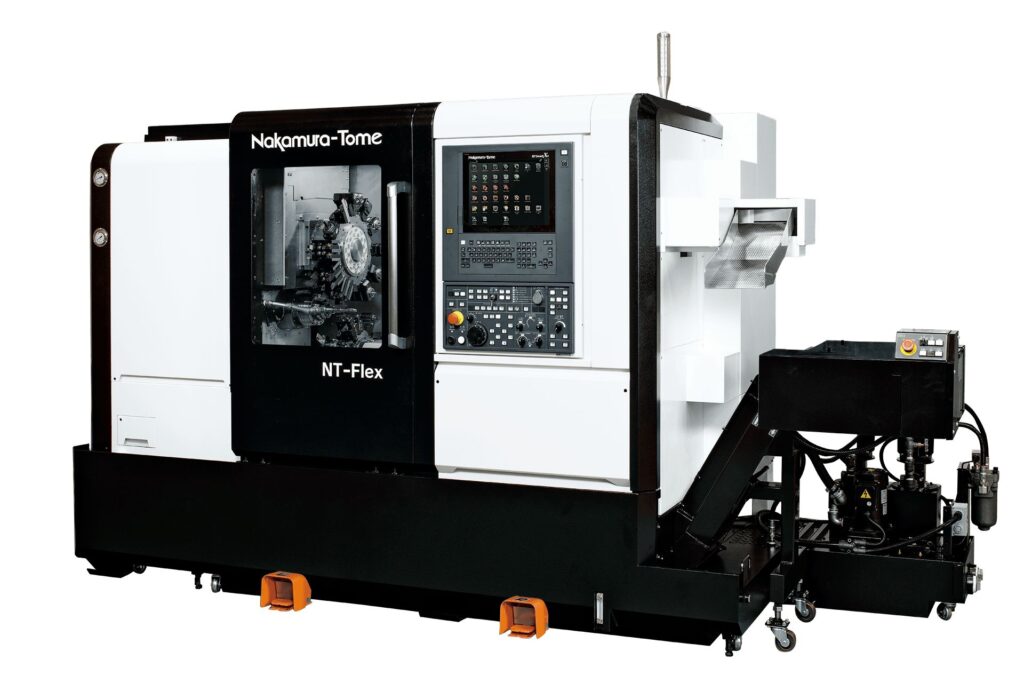
The NTX1000 and NTX2000 multi-task machines are both equipped with their own robot automation for product handling. This allows turning and milling operations to be combined within one automated machining environment, with parts automatically fed and processed during longer production runs.
This integration contributes to a stable tolerance stack-up and makes it possible to produce complex parts efficiently within multiple process steps.


ERP and MES systems
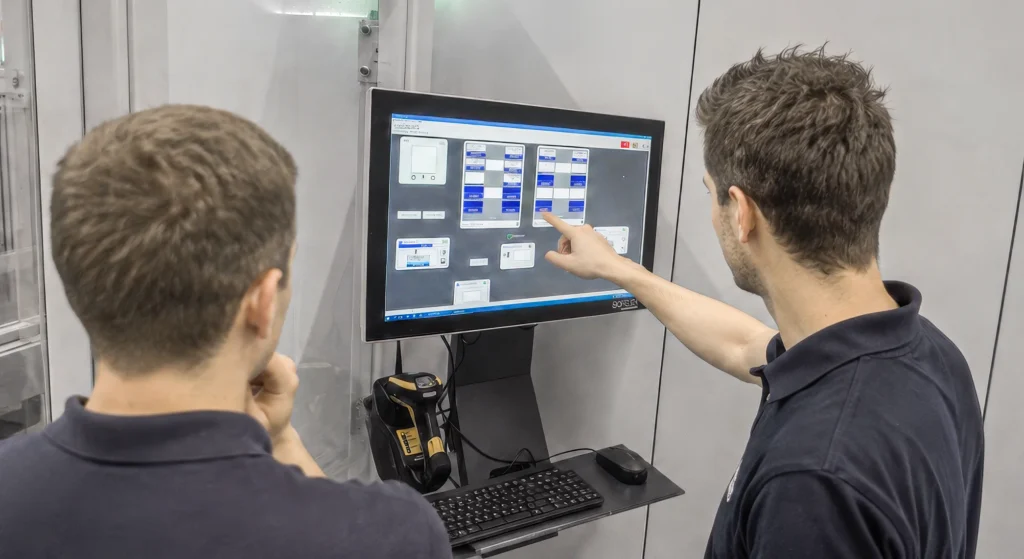
Our automation does not stop at the machines themselves. Control, planning and data processing are also digitally organised. With our ERP system, we work in a paperless factory. This gives us clear insight into data throughout the factory and allows us to know accurately where products are in the process. We can also identify potential bottlenecks in time, so we can adjust quickly.
In addition, we use an MES system that translates orders from the ERP system into instructions for the machines and automation on the shop floor. This turns production orders efficiently into concrete machine instructions and ensures that planning, production and automation are closely aligned.
Efficiency in automation
Automation as part of integrated production
By connecting ERP and MES systems, central storage, AGV transport and robot-controlled machining cells, automation at Doeko is not a separate addition to the production process. It is an integral part of the factory. This allows parts to move through different operations in a controlled flow, while quality remains manageable throughout the full route from component to module or system.
This approach makes it possible to produce complex products repeatably within scalable production environments.
Do you want to know how we use automation within your component or module production? Read more about our approach or contact us.
Frequently asked questions
Practical questions and answers
What is the capacity of Doeko’s central storage?
Doeko’s central storage has space for 102 trays. Each tray can hold up to 10 machining pallets. In total, up to 1020 machining pallets can be stored centrally and automatically supplied to machines within the automated production environment.
Can Doeko perform automated quality measurements within the production flow?
Yes. Doeko can perform automated quality measurements within the production flow. A robot cell can present pallets to both a machining centre and a measuring machine. This allows inspection measurements to become part of the route through the factory.
Which brand are your automation systems?
The automation systems at Doeko are largely developed in-house by our mechatronics team. We use proven robot technology, including Fanuc, but the design, the connection with our central storage and the integration into the factory are developed by Doeko itself.